
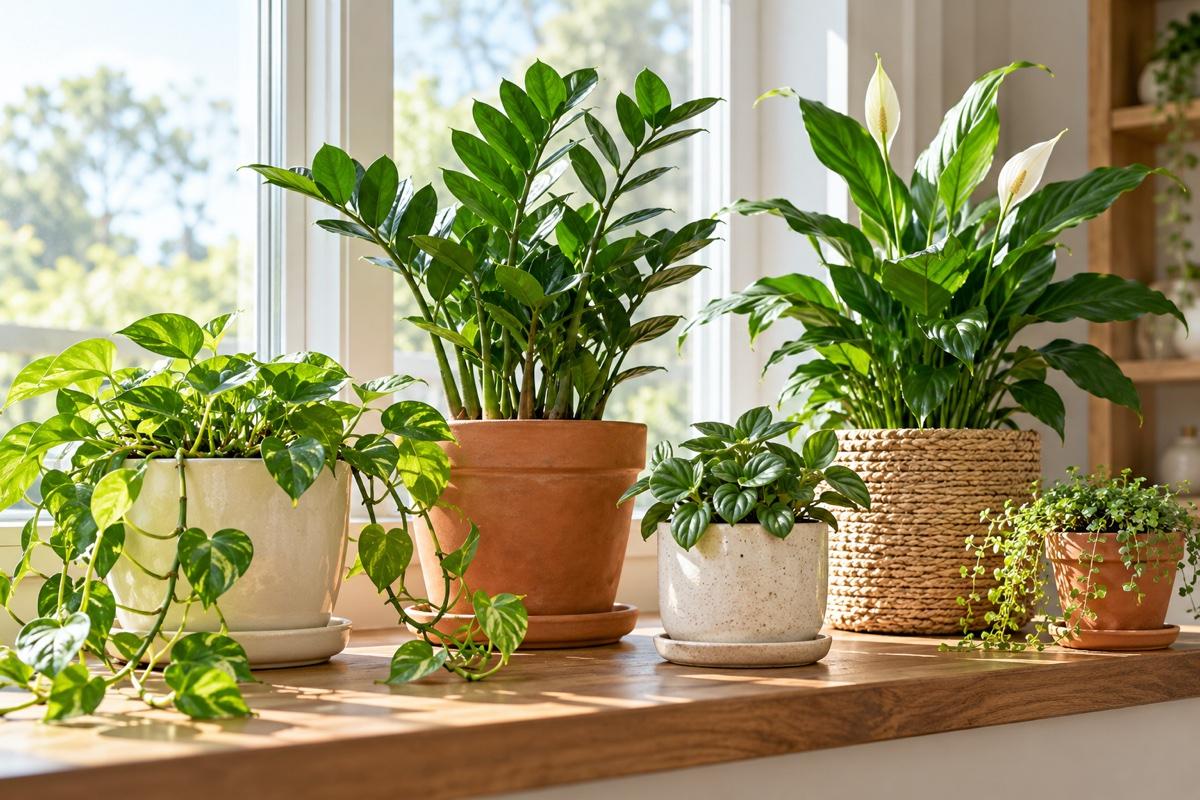
Pots & Plants
A Better Pot for Your Plant and Your Space
Choose a planter by checking drainage, pot size, material, and where the plant will live—not appearance alone.
Check drainage before you repot
For a plant growing directly in a pot, drainage holes let excess water escape. A decorative pot without holes can still work as an outer cover: keep the plant in its nursery pot inside, then empty any water that collects at the bottom. A saucer protects the surface beneath a draining pot, but it should not leave the roots sitting in water.
Choose a size that suits the roots
When repotting, choose a container only a little wider than the current root ball. A much larger volume of soil can stay wet for longer than the roots can use, especially indoors. Check that the pot is deep enough for the plant and stable enough to support it as it grows.
Match material and style to the setting
Unglazed terracotta is porous and often dries more quickly; glazed ceramic and many plastic pots hold moisture for longer. The right choice depends on the plant, how often you water, and the light and temperature where it sits. For balconies or shelves, consider weight, drainage, and stability as well as color and shape. A planter can add decoration while still giving the plant the conditions it needs.